Choosing a sideboard: size, storage and room layout
Measure more than the wall: plan a sideboard around doors, drawers, sockets and the things you need to store.
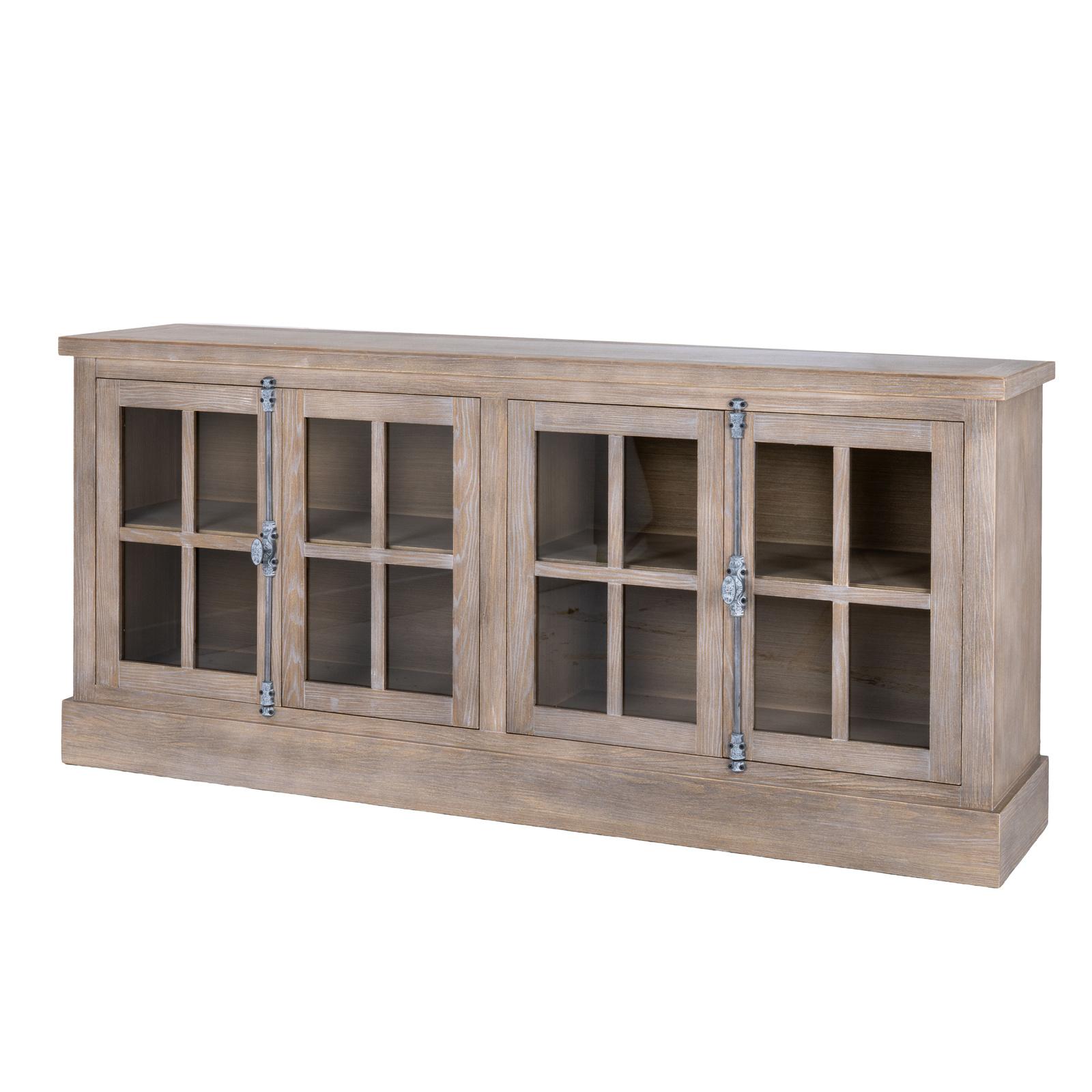
The right sideboard solves a particular storage problem and sits comfortably in the room. Start with what belongs inside it, then check how the cabinet works when its doors are open.
List the things you want to put away
Separate everyday items from occasional pieces. Dinner plates, serving dishes, table linen and paperwork need different kinds of space. Measure the largest item rather than estimating from a photograph. A wide cabinet can still have a narrow compartment behind each door.
Check internal dimensions, shelf positions and whether shelves are adjustable for the exact product. External measurements cannot tell you whether a favourite platter will fit. If those details are not shown, ask before ordering rather than assuming a door reveals one uninterrupted space.
Measure the room with doors and drawers open
Mark the cabinet’s width and depth on the floor. Then allow for the full movement of its doors and drawers. Check the route beside the dining table with chairs pulled out, and the clearance where a room door swings towards the cabinet.
Look at skirting boards, sockets and radiators. A cabinet may stand away from a wall because of the skirting, increasing its effective projection. Avoid blocking access to sockets or controls you need to use, and check any required product clearances before deciding its position.
Choose display space deliberately
Glazed doors make the contents part of the room. They suit pieces you enjoy seeing, but they also make the organisation inside more visible. Closed storage is often more forgiving for mixed household items. Decide which job matters most before choosing the front.
For example, the Haldon four-door glazed sideboard is worth exploring when display is part of the brief. Check its individual product details rather than assuming every Haldon piece has the same storage arrangement, finish or dimensions.
Balance height with what sits above it
Think about the whole wall. Mark the top of the sideboard with removable tape, then sketch the intended position of a mirror or artwork above it. Allow room to use the surface rather than filling every part with objects.
A lamp introduces a separate practical question: where will the cable and socket be? Check the actual lamp’s requirements and avoid planning a trailing cable across a walkway. A styling photograph should be treated as an arrangement idea, not a list of included accessories.
Check delivery, assembly and fixing requirements
Record the route into the room, especially corners at the foot of stairs and narrow internal doors. Ask about packaging, assembly and the supplied product’s fixing instructions. Follow any wall-attachment requirements using fixings suitable for your wall; do not assume a heavy cabinet needs no securing.
Finish the decision with three checks: the items fit inside, the cabinet opens comfortably, and the delivery route works. A smaller piece that meets those needs will usually serve the room better than a larger one selected only to fill a wall.
Continue exploring