Will a sun lounger fit when it’s laid back?
Measure the space for reclining, getting up and sharing a terrace before choosing a sun lounger.
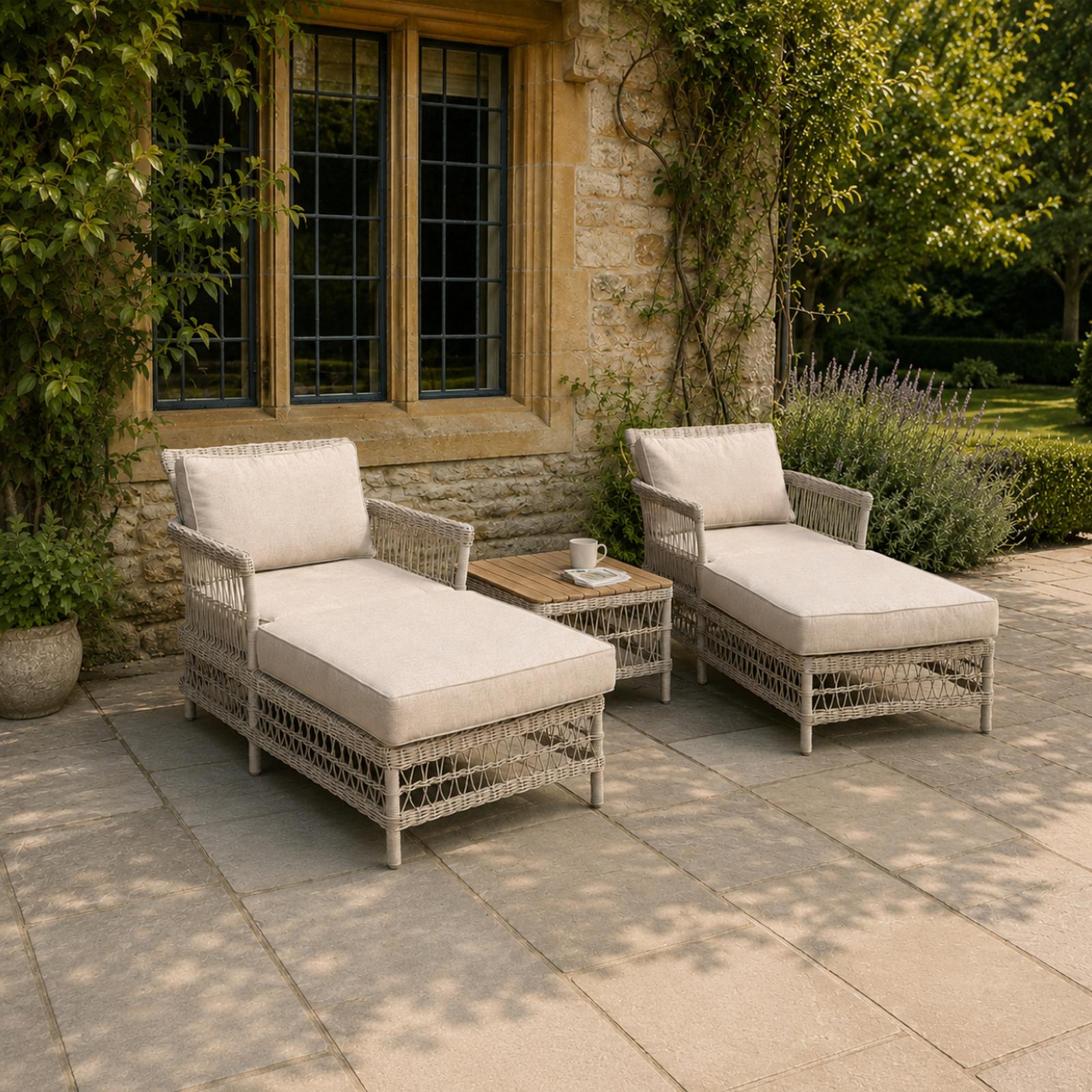
A lounger can look perfectly placed in a photograph and still be awkward to use. The footprint that matters is the one it takes up on the afternoon you want to stretch out, with somebody else still able to reach the garden.
Start with the spot you would actually use
Take a chair outside at the time you usually read or rest. Notice which way you turn to avoid looking into the sun. A position that fits neatly along the wall may leave you facing the wrong way; sketch a second position before comparing sets.
Ask for the longest working length
Check the dimensions in the position you intend to use. If a backrest adjusts, ask whether the quoted length is upright or fully reclined, and whether any part moves backwards as you lower it. Don’t assume an adjustable model lies completely flat.
Try the ends as well as the sides
Mark both ends and sides on the paving. As an example, a 200 cm outline on a 245 cm stretch leaves 45 cm in total at the ends, not at each end. That arithmetic tells you nothing about access along the side: try stepping into and out of the marked space.
Lay out the whole set
If two people usually sit together, mark both loungers and decide where a drink or book could go. Try the arrangement with one person standing while the other stays seated. Keep the route back to the house usable without stepping between the loungers.
Check the exact pieces before deciding
Use the Provence sun lounger set page to check the pieces supplied and their measurements. If you plan to move them each evening, measure the storage doorway too. Ask about weight and carrying arrangements rather than assuming that outdoor seating folds, stacks or has wheels.
Continue exploring